Do you see yourself in a clean hydrogen fueled vehicle anytime soon? If you are in the market for a zero emissions vehicle, then H2 fueled vehicles may be an option for you now- or in the near future. Their big advantage over today’s EVs is that they can be refueled within a few minutes at the pump, using a process that will feel very similar to filling up with petrol or gasoline.
Hydrogen fuel cell electric vehicles or FCEVs, have a lot in common with EVs, as it is electricity that powers the engine. However, electricity is generated by a chemical reaction between hydrogen and air in the fuel cell, with the only emissions byproduct being water. Hydrogen vehicles do have batteries as well, which act as temporary storage media for added efficiency. Overall, hydrogen vehicles provide a range of 300-400 miles without refueling, which makes their range comparable to most EVs on the market today.
Early Adoption Challenges and Progress
A key challenge that early FCEV adopters should be aware of is that they are truly at the forefront of the technology. For one, the hydrogen fueling infrastructure that is supporting these vehicles is still evolving. In North America, hydrogen fueling stations are primarily located throughout California, but are emerging in WA, TX and OR, as well as in Canada. In the EU, the European Hydrogen Refueling Stations Availability System currently shows nearly 200 H2 stations spread throughout 17 countries.
Another consideration is that while there is a race to make the clean H2 fuel more cost competitive, the price of hydrogen at the pump will likely cost you more than gasoline for now. As hydrogen production, fueling station and delivery infrastructure is being built, you can expect to pay 4-5 times or more than gasoline in the US, depending upon your location. In CA hydrogen prices at the pump may cost you more than $30/ kg (roughly equivalent to $15/ gal gasoline). In the EU and Asia hydrogen fuel costs are generally lower and in some cases competitive with gasoline or petrol costs.
The good news is that these prices are expected to come down significantly as infrastructure is put into place, and as producers are able to scale up their clean hydrogen generation capabilities. In some regions, incentives are helping to close the gap with traditional fuels. Manufacturers such as Toyota are also providing free fueling incentives to help make adoption easier.
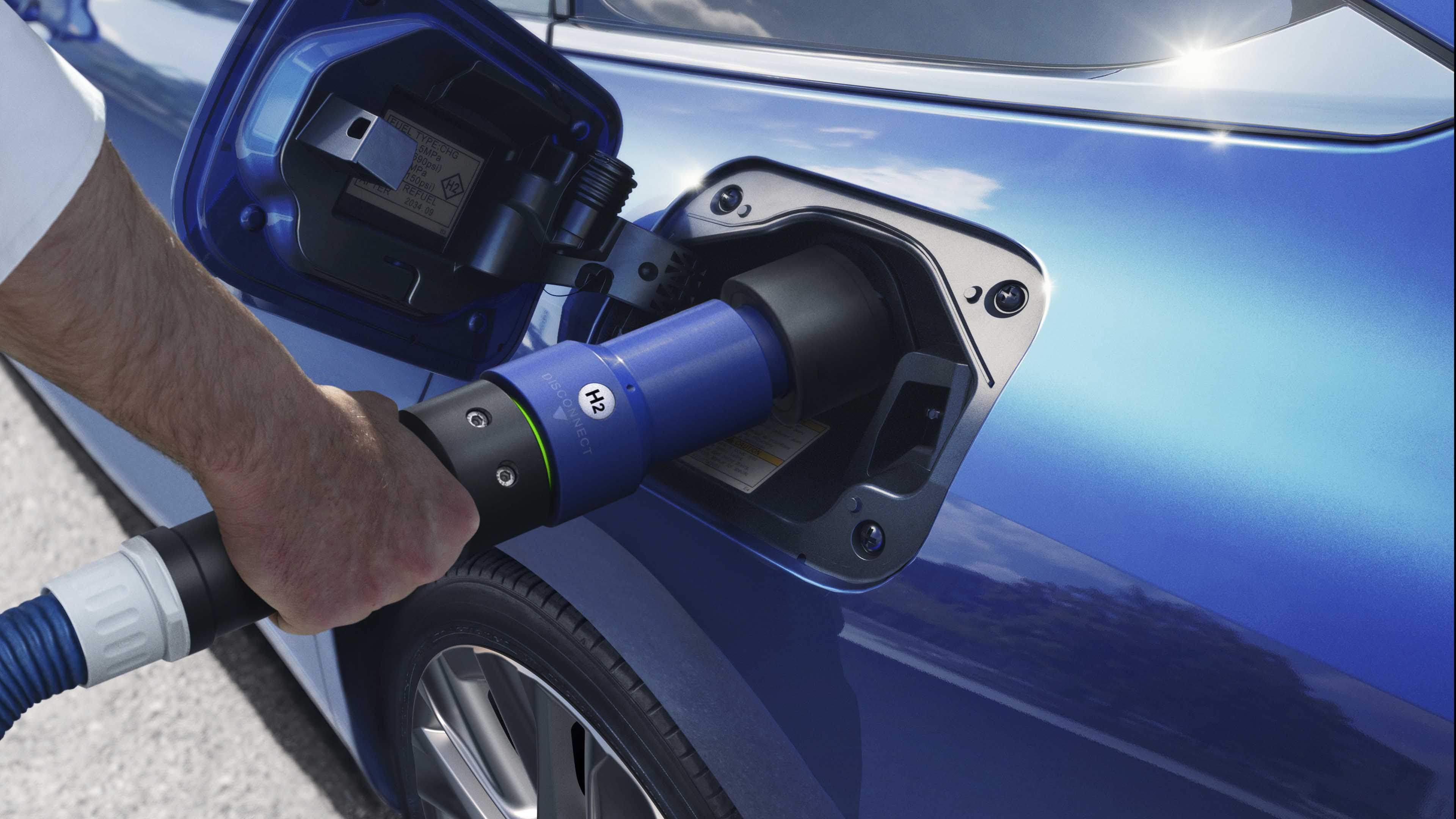
A positive announcement is that of a new fueling station recently announced within a local community in Oregon which is promoting $4/Kg clean hydrogen fueling. How is this possible? The community has an abundance of low carbon hydro power, which can be tapped during off-peak times to keep the clean hydrogen electrolysis generation process cost-effective. This practice also has a side benefit of helping to stabilize their electricity grid.
Take a Ride on the Hy-Line
FCEVs also have a niche for use in heavy use transport such as commercial trucking and public buses which need to cover longer distances without long refueling times. Public transport is a particularly attractive opportunity in urban areas because of the air quality benefits (shared in previous blogs) achieved from swapping out diesel with zero emissions engines.

Your next trip to London, in fact, may involve a ride on a hydrogen fuel celled double decker bus. London’s fleet of 20 clean hydrogen buses have a range of 350 to 400 miles and can be refueled in 3-5 minutes at their central garage. Overall, registration rates for electric fuel cell buses are on the rise throughout Europe.
Kirt Conrad, past Chair of the Ohio Hydrogen and Fuel Cell Coalition and Co-founder of the Ohio Clean Hydrogen Collaborative, states that, "We are seeing transit systems in Las Vegas and Los Angeles County adopting hydrogen vehicles. Internationally, Germany and Japan continue to invest in hydrogen and fuel cell development."
Hydrogen-based transport is truly the wild west in many ways. If you do decide to make the leap as an early adopter of a H2 fuel cell vehicle, or as a supporter of H2 based public transport infrastructure in your community, you will be sending a meaningful buying signal to all of the industry, and to the policy makers who are putting the infrastructure in place for the hydrogen economy.