For many years we have been seeing advances in how consumers interact with the electricity grid. Smart thermostats can provide incentives to lower air conditioning and heating use during peak times. Excess solar generated from homes can be sold to the utility in many states. If you have batteries in your home, including the one in your EV, you may also qualify for incentives to provide some of that stored power back to the grid when needed.
While the contributions from any one household are small, by aggregating thousands of such grid connected devices, enough electricity can be amassed to become what is known as a Virtual Power Plant (VPP) on the grid.
What are VPPs and how do they work?
The grid is the network of power lines, distribution networks and substations that deliver electricity to end users. It was developed to operate in one direction. Large plants generated electricity which was sent through transmission lines to local distribution networks, where it eventually powered end users such as residences, buildings and industry.
Now, advances in grid communication technologies have made electricity movement bi-directional. Electricity can now be generated and effectively managed at the local distribution level. Electricity can be added back to the grid from household solar, batteries and EVs. Electricity demand can also be temporarily reduced by lowering thermostats and slowing of some industrial electrical applications.
Using VPP software platforms, utilities and third party aggregators can pool all of these generation and demand resources to mimic a large power plant in both scale and reliability. VPPs are emerging globally as pathways for consumers to beneficially participate in the regional delivery of clean energy.

How are VPPs being deployed?
VPPs are being deployed in the EU, Canada, Australia, the UK and Japan. In the US, a recent Woods Mackenzie market report stated that VPPs have been in steady growth mode, reaching nearly 40GW of capacity by late 2025. That’s enough to equal about forty 1GW power plants, or enough to power about 40 million homes. Residential sources are a growing contributor to VPPs, measuring in at about 4GW of that capacity at the time of the report.
VPPs are deployed typically when electricity demand is at its peak, not 100% of the time. However, since utilities plan their generation capacity to cover peak demand, having a reliable VPP in the region means that the construction of a new power plant could be avoided, or that starting up an older, less efficient “peaker plant” can be avoided. Both scenarios reduce costs to local ratepayers. VPPs provide carbon emissions reduction through greater integration of renewables and by lowering the demand for fossil generation. One VPP provider, Leap, estimates that their VPP network resulted in the reduction of 335,000 metric tons of CO2 over a four year period.
What else is in it for consumers?
Besides the benefits of contributing to a lower carbon and more stable electricity grid, consumers can receive financial incentives for participating in VPPs. Incentives vary with location and VPP structure, and may be paid directly from the utility or from a third party VPP vendor. Incentives may include direct payments, performance-based payments, rebates and bill credits/reductions. The Rocky Mountain Institute (RMI) has put together a VPP “flip-book” which provides specific examples of how VPPs are structured and incentivized in various regions in the U.S.
In the US Northeast, National Grid's ConnectedSolutions is a regional VPP which allows customer participation using multiple devices. In Massachusetts, the VPP has a capacity of 227 MW with nearly 100,000 customers participating. Financial incentives include an estimated $1200 per year for participants in the battery program and $20 per year for those in the thermostat program, with a $50-$100 bonus for signing up. For the battery program, customers agree to limited contributions, up to 3 hours during peak summer events, and can opt out at anytime. The program is being expanded to other states, allowing utilities to coordinate a larger VPP capacity when needed.
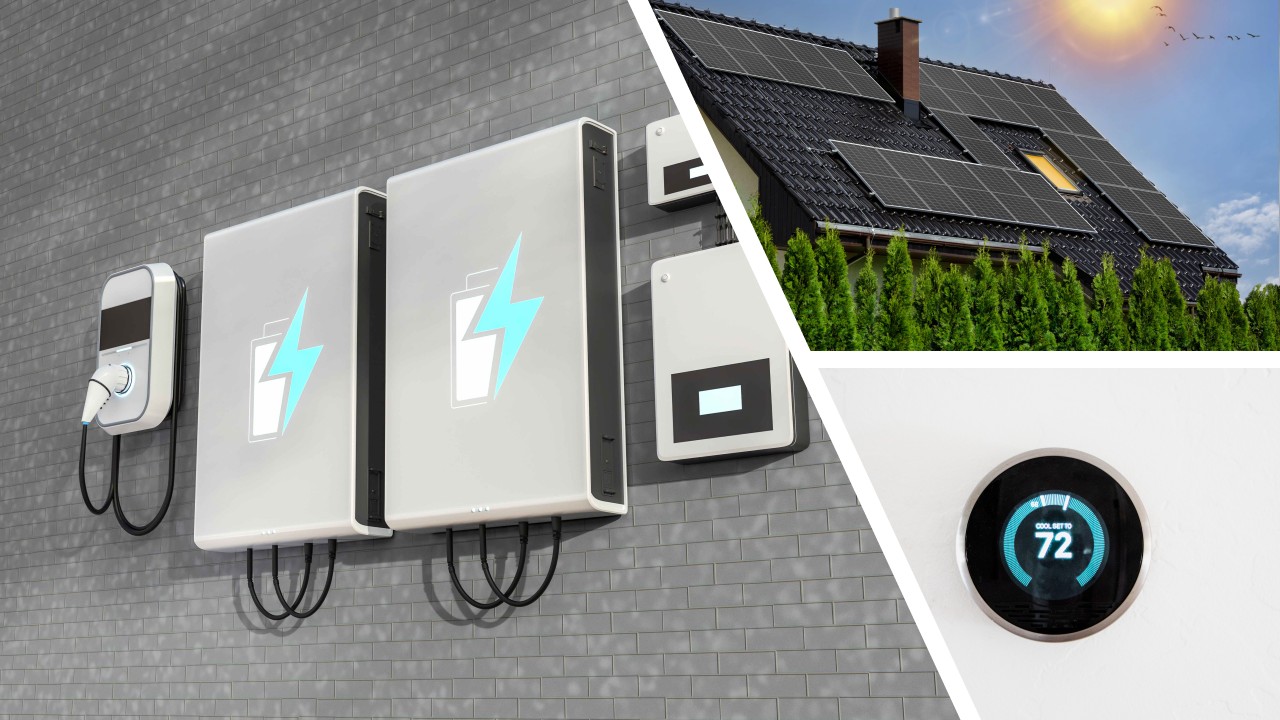
Customers may also be able to participate in VPPs through their clean technology vendors. For example, in CA, Sunrun operates a VPP that has over 56,000 customers enrolled. Known as CalReady, incentives include annual payments of $150 per battery, $125 per EV and $100 per thermostat in the program. In 2025, a CA VPP demonstration combined home battery aggregation capabilities from both Sunrun and Tesla. The test, conducted over two hours in collaboration with several CA utilities, brought 535MW of power to the grid - all from the over 100,000 residential participants, showing that consumer generated electricity can be a reliable asset at scale through VPPs.
Interested in being an active provider of clean energy to the grid? Check with your local utility, your state energy website, and with your home clean energy technology provider(s) to see how this works in your region.