We have long benefited from the ocean providing an enormous sink for the carbon that is emitted into the atmosphere, with 25% of man-made CO2 emissions over the past 40 years being absorbed by the ocean.
However, evidence suggests that this natural carbon capture activity may not be sustainable. Continued absorption of CO2 limits the ocean's capacity to remove similar amounts in the future, and is leading to ocean acidification, which can harm marine life.
Could we engineer more sustainable ocean-based carbon capture solutions? I recently had the opportunity to hear firsthand from several researchers asking these questions.
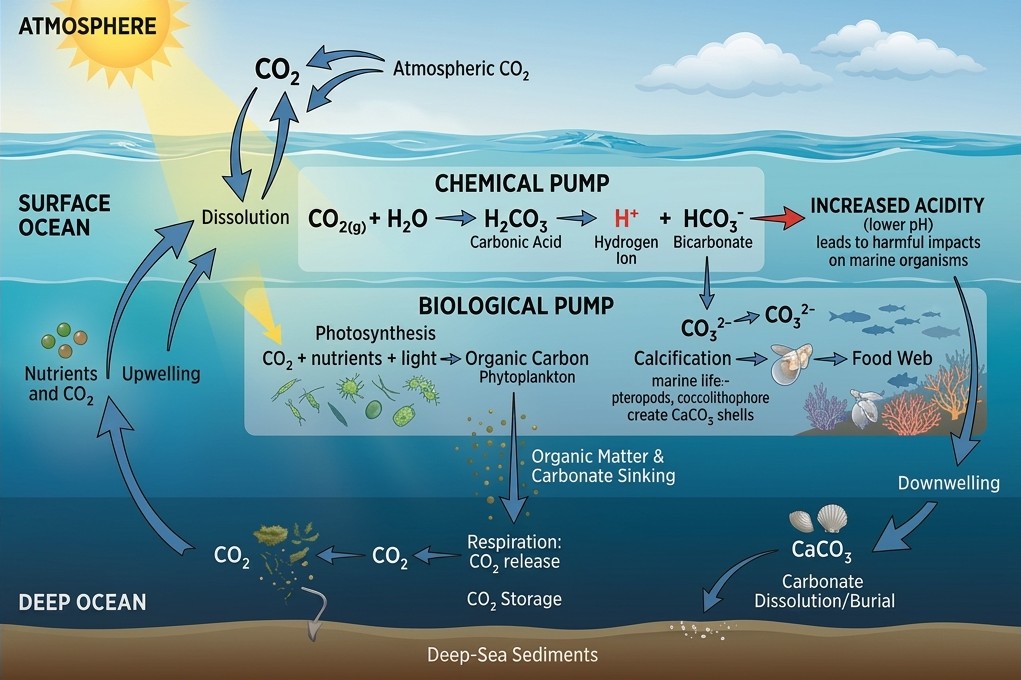
There are many methods being explored to enhance marine carbon removal. Existing oil & gas infrastructure can be repurposed for deep sea CO2 disposal. Micronutrient additions, such as iron, can be added to stimulate phytoplankton in the near surface of the sea. Phytoplankton naturally take up CO2 from the air though photosynthesis, and can be naturally or artificially sequestered to the ocean floor for long term storage.
Ocean Alkalinity Enhancement
The increased levels of CO2 in the atmosphere have driven more CO2 into the oceans, resulting in a reduction in buffering capacity and increases in ocean acidification. Is it possible to reverse this process? The science of Ocean Alkalinity Enhancement (OAE) is exploring just that. Theoretically, adding alkalinity to the ocean can increase the ocean’s capacity to absorb CO2 while helping to keep pH in check.
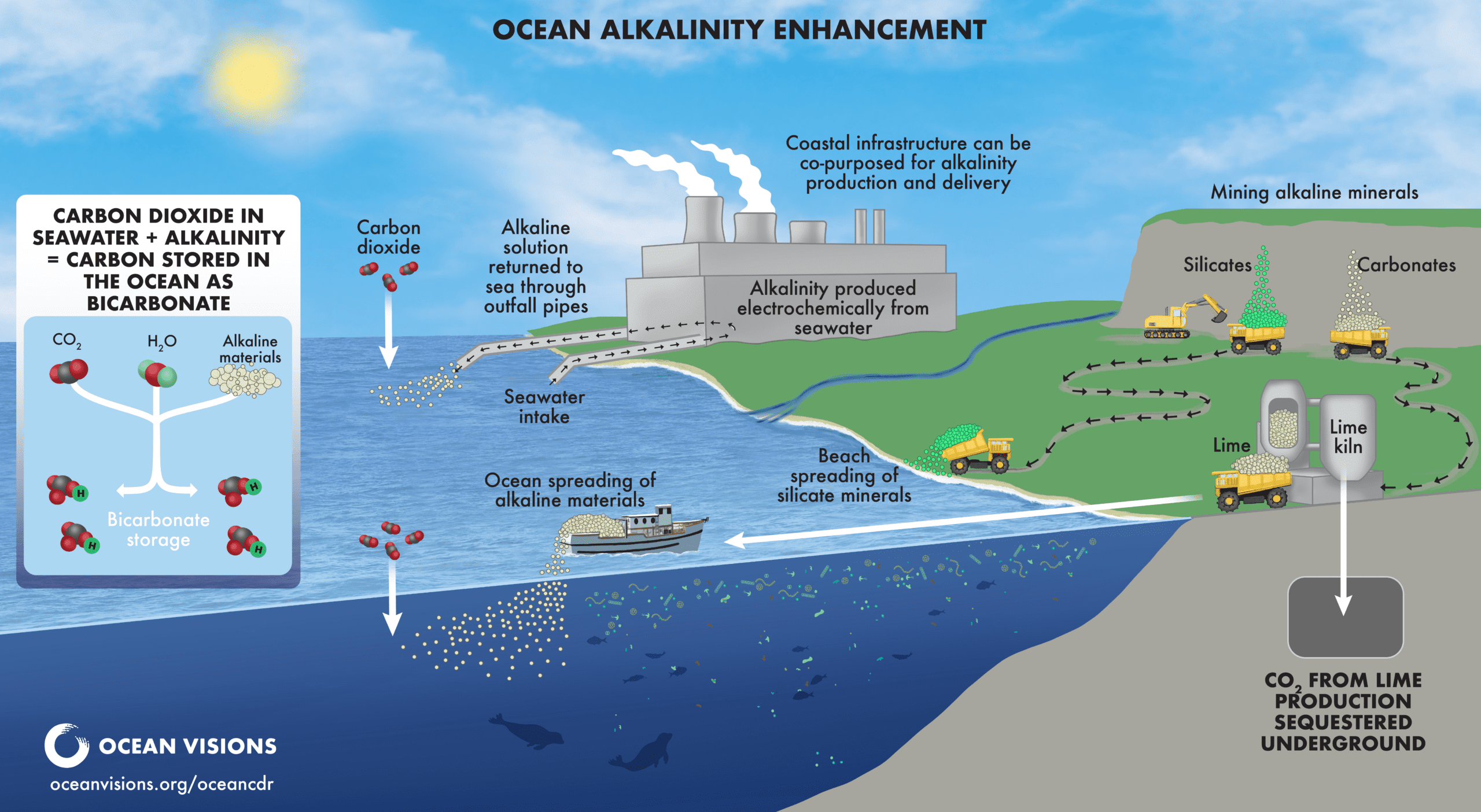
While the chemistry makes sense, there is a lot of work to be done to validate OAE in the field. Are additions effective over time? Are there any adverse consequences to marine life or to fisheries? One organization at the forefront of such OAE research is the Woods Hole Oceanographic Institute (WHOI), located on Cape Cod, MA.
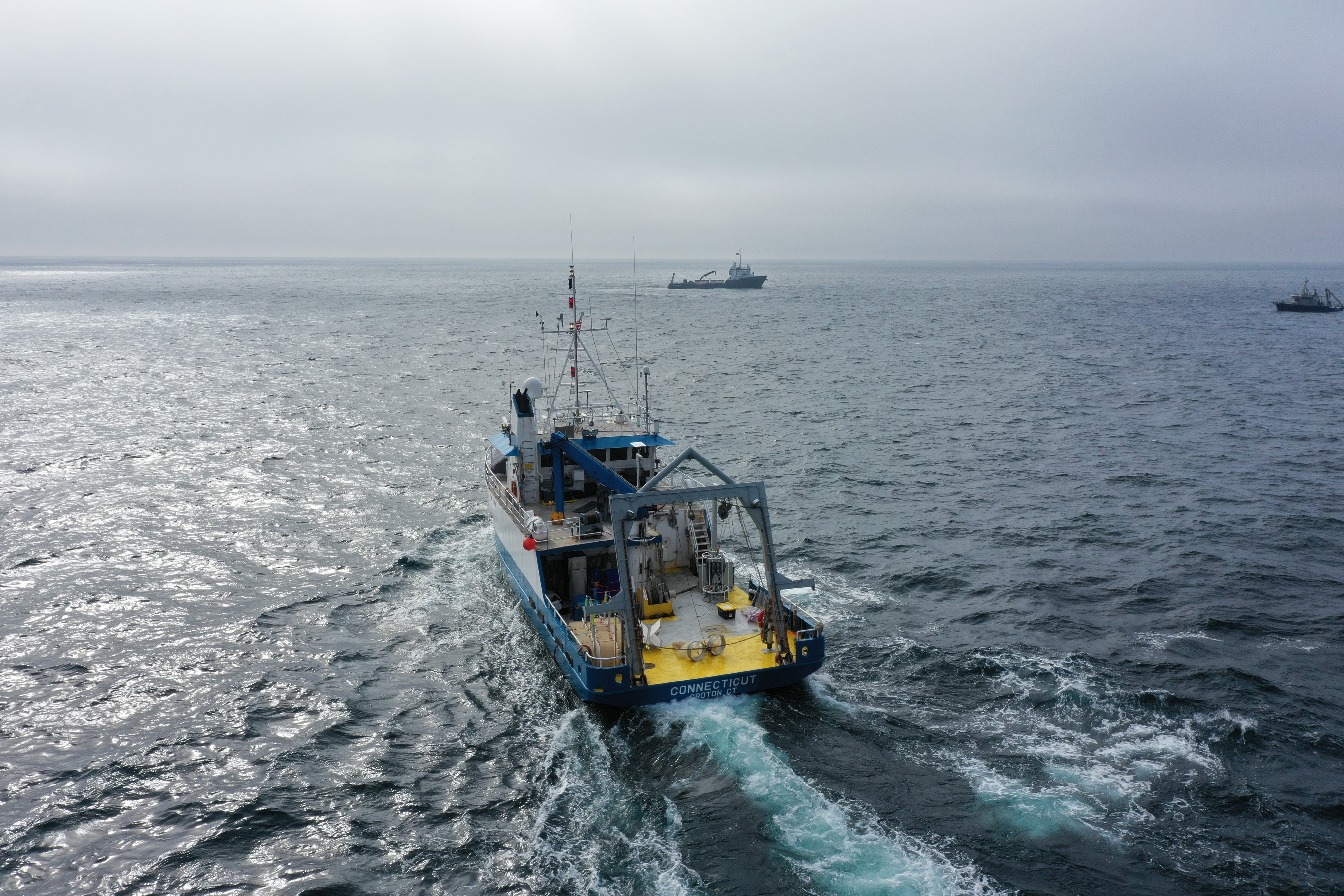
A WHOI team recently concluded the first EPA authorized field trial of OAE in the Gulf of Maine. The project, called LOC-NESS, successfully demonstrated that alkaline chemical additions could be safely used to absorb CO2 from the atmosphere. The addition used was Sodium Hydroxide (NaOH), a pH additive commonly used in drinking water for its safety advantages. The project team used extensive modeling and on-site monitoring techniques to ensure that the chemicals dispersed safely in the environment with no significant impact to marine life such as phytoplankton, bacteria, or fish larvae.
The challenge of understanding the fate of OAE additives in complex marine environments is also being taken on by the non-profit Carbon to Sea Initiative. As part of their efforts, they are developing guidance to validate carbon removal effectiveness and to monitor for potential environmental impacts at OAE sites. Collaborative field sites in Iceland and Canada are dedicated to researching the effectiveness and potential consequences of OAE additives. Evaluations of the latest marine data capture and analysis tools, such as solid state sensors and eDNA biological monitoring, are also underway.
Can coastal power plant carbon emissions be captured in an ocean friendly manner using OAE?
One Canadian company, pHathom, thinks so. Operating in the Atlantic seaboard, pHathom is demonstrating a technology which captures power plant CO2 emissions (flue gas) directly into seawater. The seawater is neutralized using limestone and returned to the ocean as bicarbonate. Bicarbonate is a naturally occurring buffer in ocean waters that can potentially provide CO2 storage for thousands of years while helping to mitigate ocean acidification.
Although the technology is widely applicable, their business model focuses on carbon capture from coastal biomass plants, which can be a carbon negative value proposition. pHathom is working towards commercialization by 2030.
Will marine carbon removal practices like OAE ever be safely deployed at scale?
While we don’t know the answer yet, the scientific community is tackling this challenge – ethically and transparently, in a way that will encourage public acceptance for the practices that ARE proven to be safe and viable.
The potential for success is well worth it. One organization estimates that marine carbon removal technologies could remove 8GT of CO2 per year by mid-century if proven safe and effective. That is equal to the annual emissions of the US and India combined.