This series explores emerging ocean-based clean energy and CO2 capture solutions
The ocean is a relatively untapped source of renewable energy. While a small contributor today, an international goal is for ocean-based energy to reach 300GW of capacity by 2050, thus preventing over 500 million tonnes of carbon emissions.

Any day spent at the beach will bring home the endless energy of the sea. Waves constantly crash on the shore. Tides rise and fall. Currents pull you in different directions as you swim. Pockets of warm water can be felt as you wade on the shore.
All of these are fueled by natural, renewable energy sources- the heat from the sun, the gravitational pull of the moon and the rotation of the earth. Engineering advances, combined with a desire for sustainable energy, are turning these sources into a suite of new ocean-based energy technologies.
Ride the waves
Wave energy technologies tap into the kinetic energy of the waves themselves. If you have been on a deep-sea cruise you have felt the up and down motion, or roll, of the waves for yourself.
There are multiple approaches being explored to tap into wave energy. One company, Seabased, extracts energy using an offshore piston-like device anchored to the seafloor that is driven up and down by the waves. The electricity generated is transmitted to the grid onshore via undersea cables. Seabased has successfully undergone pilot testing in Finland, Norway and Sweden, and now has agreements in place to provide wave energy in several island and coastal communities in the Caribbean and Pacific.
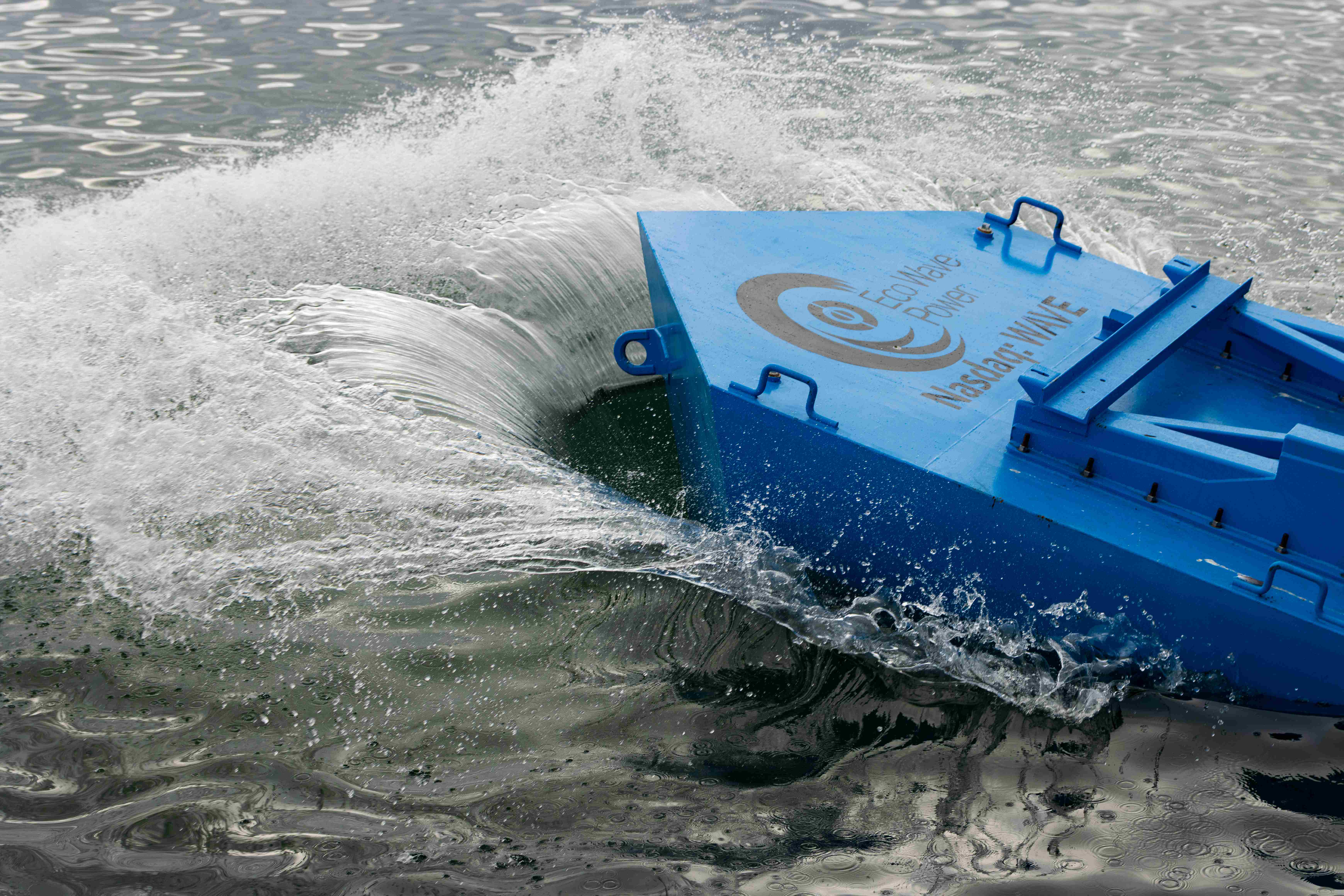
A shore-based wave energy demonstration unit was recently installed at the Port of LA. Developed by Swedish Eco Wave Power, the floating wave capture device (seen below) is on the ocean surface, but drives piston-based electricity generation onshore. Since much of the generation and transmission infrastructure can be located onshore, the technology has permitting and operating advantages over many fully offshore concepts. The demonstration is set to run for 2 years and can be viewed by the public at the AltaSea Institute at the Port.
Reliable tides
Tidal energy generation takes advantage of the rise and fall of ocean levels between high and low tides. If you have ever stood by an ocean inlet as the tide is going out, you have likely noticed the rapid flow of water towards the sea. Reliable energy can be captured from this current through turbines (think underwater versions of wind turbines) that will transmit electricity to the shore.
Scotland, where tidal currents are particularly strong, is the location of the Forward2030 project. In this initiative, tidal energy is integrated with wind power and energy storage, which further add predictability to generation. Clean hydrogen is also produced to decarbonize other sectors. Overall, the project has a goal to produce more than 2030 MW of electricity (enough to power 2 Million homes) by 2030, while reducing tidal energy costs and life cycle CO2 emissions.

Naturally stored solar
What about tapping into the tremendous amount of heat energy stored in the ocean from the sun? It turns out that this is becoming possible, although currently only viable for tropical regions with warm surface waters. The process, known as Ocean Thermal Energy Conversion (OTEC), uses the warm surface waters to evaporate refrigerants, which then drive a turbine to create electricity. This occurs in a closed loop with the refrigerants being cooled back to liquid form by colder waters brought up from the deeper ocean depths. OTEC is of particular interest to island communities, such as Hawaii, that are overly reliant on imported fossil fuels for their electricity.
Is there a future for ocean-based clean energy?
While the potential is huge for marine energy, it is truly early stage, representing less than 1% of the current global renewable generation portfolio. Technologies need to be scaled up to be cost effective and reliable in the harsh marine environment. Extensive monitoring needs to continue to ensure that there is no harm to marine wildlife and ecosystems. While growth has been slow, one market estimate is for the marine energy industry to more than double in size to $5B by 2035 thanks to grants and rising demand for clean energy.
The ocean also has vast potential to support carbon capture needs. For more, see part II of this series.