There is a relatively untapped renewable heat source beneath our feet. The earth’s core reaches temperatures seen at the surface of the sun, over 10,000 °F. Moving upwards from the core through thousands of miles of magma and rock, temperatures can still reach almost 400 °F just below the thin crust layer that we live upon.

Technology advances are making it easier to tap into this massive clean energy source in a number of ways. At the near subsurface, geothermal heat extraction is being used for residential heating and cooling. Going deeper, drilling innovations are rapidly expanding our access to the hot rock layers which can provide steam for electricity generation.
Sticking your hose in the sand
Just a few feet below the surface, the temperature remains constant, near 50-60 °F. Homes can utilize this heat source by deploying a series of underground pipes acting as a geothermal heat pump. In the winter, cold fluids can be pumped through the warmer subsurface, where they are heated and brought back to the home. The situation is reversed in the hot summer months, where hot fluids are cooled beneath the surface. While this takes a considerable investment to install the piping and heat pump infrastructure, the result is a potential 40-70% reduction in your overall heating and air conditioning energy use, while cutting your household carbon emissions.
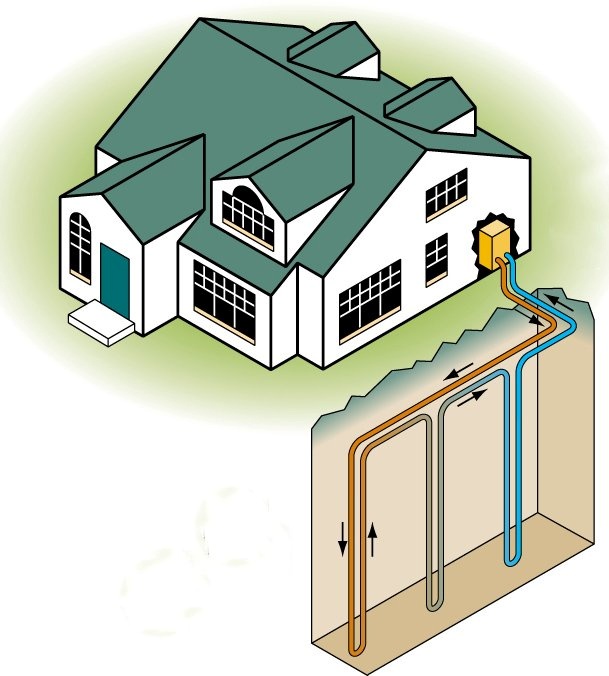
Community based geothermal networks are extending this approach beyond individual homes throughout the US and Europe. New England, in particular, is embracing this concept. In Framingham, MA, a geothermal project is nearing completion that serves 36 residential and commercial buildings. Two underground borehole drilling sites, located beneath parking lots in the neighborhood, house the piping which draws the heat from the ground. A pumphouse circulates the heated (or cooled in the summer) liquid throughout the neighborhood in a loop located about 5 ft below the streets. The network connects to the heating and cooling infrastructure located in individual homes and businesses. For one housing complex in the network, a 75% reduction in heating costs and a 75% reduction in emissions is estimated.
Another ambitious project underway in New Haven, CT is a geothermal system that will serve over 1000 residences as well as the train station. The project, which received a $9.4M USEPA grant, is estimated to reduce greenhouse gas emissions by 63000 metric tons through 2050 by reducing fossil fuel and electricity use at the station.
Interested in exploring community geothermal systems for your community? Vermont provides a resource guide that can be duplicated in other regions.
Geothermal power
Tapping into hotter layers of the subsurface, geothermally generated steam is a renewable energy source that provides the reliability of traditional base loaded power plants.
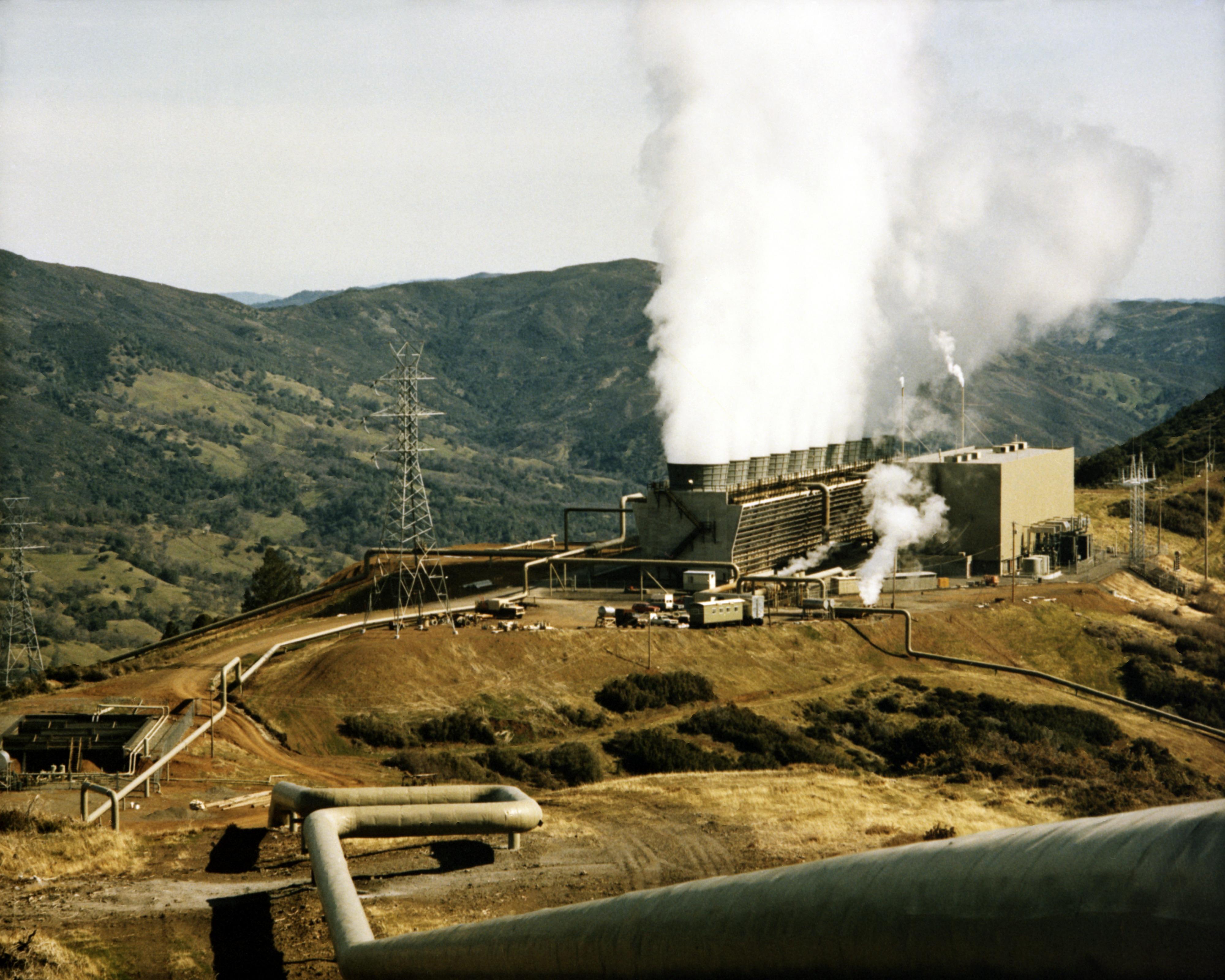
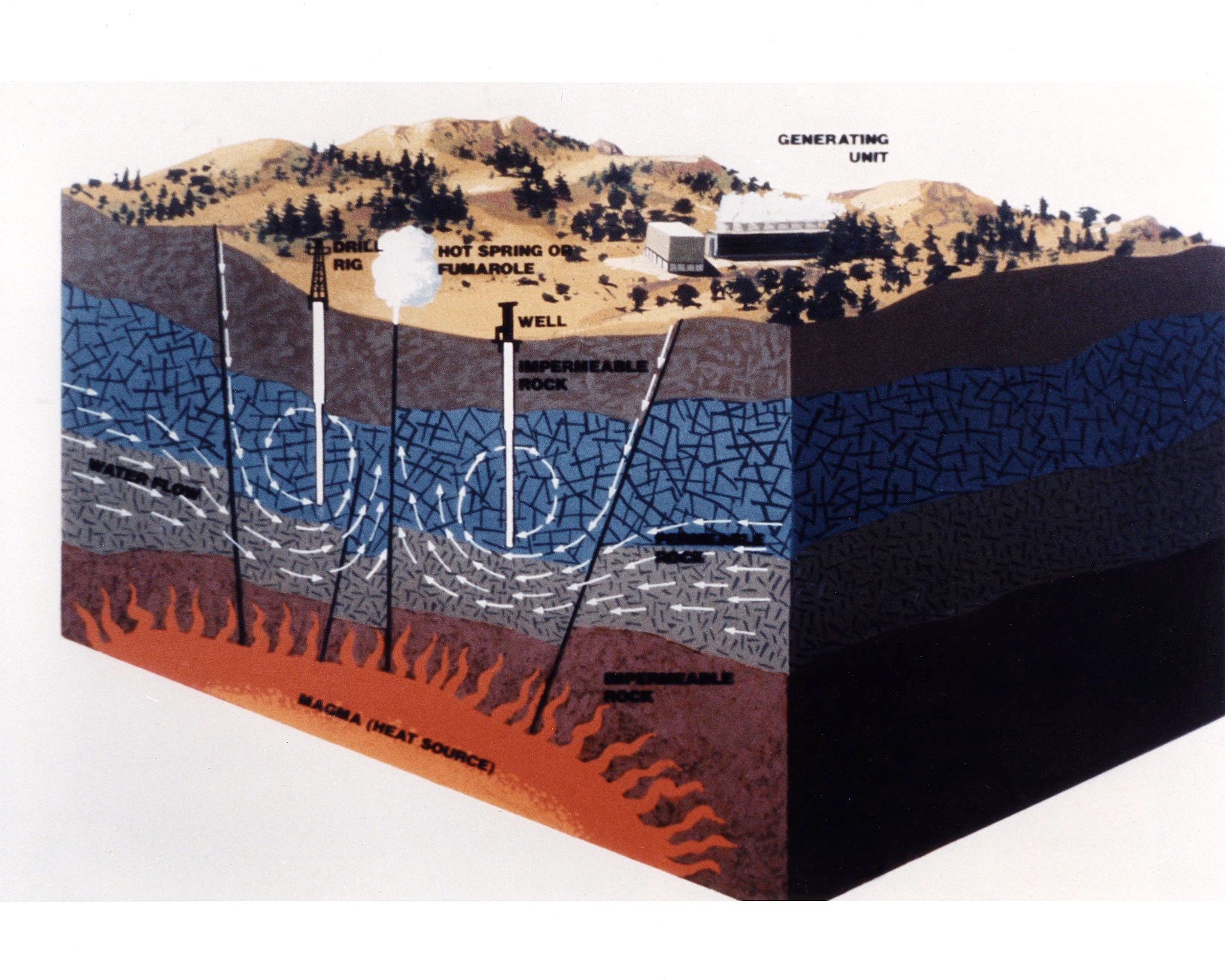
Conventional geothermal plants, such as the one in Geyserville, CA, occur in areas where water and thermal sources naturally appear together near the surface. The Geyserville complex generates about 750 MW of renewable energy, enough to power nearly 750,000 homes.
Enhanced geothermal revolutionizes the field
The advances which brought access to abundant low cost natural gas in the US are now enabling geothermal power generation expansion across the globe.
How does this work? Outside of active regions such as Geyserville, we need to go deeper into the subsurface to find the rock formations that are heated by the earth to temperatures hot enough to boil water. Shale gas fracturing technologies are being modified to take advantage of these geothermal expansion opportunities. Lateral drilling and pressurized water injection techniques open up chambers and fractures in the rock, which allow for injected water to be returned to the surface as steam, generating electricity.
Two US companies are among those leading the commercial development of advanced geothermal, Fervo Energy and Sage Geosystems. Fervo is applying its drilling expertise from the oil and gas industry as well as advanced subsurface analytics to make enhanced geothermal scalable. They are operating a test facility in Nevada, and anticipate that 500 MW of clean power will be generated from its Utah Cape Station Facility when it is fully operational in 2028. Fervo recently announced plans for an Initial Public Offering (IPO) with an estimated company valuation of up to $6.5B.
Sage Geosystems uses a pressure-based approach to enhanced geothermal. By adding pressure to subsurface reservoirs, they create a “lung fracture” that can expand and contract. The energy and pressure added during expansion can be retrieved, along with geothermal heat, during contraction. This pressure-based approach adds an energy storage capability to the lung fractures while keeping the overall process net energy positive.
When is enhanced geothermal coming?
The International Energy Agency estimates that enhanced geothermal is increasing the potential of geothermal energy production by over 50 times that of today’s global installed capacity of 9.4 TW. Realizing such potential would make geothermal the second most abundant renewable energy source, just behind solar.
Experts suggest that a good comparison for when we might see enhanced geothermal at full scale can be made by looking at the shale gas boom, which took about 15 years to go from infancy to where it is today. Enhanced geothermal companies need investors to scale up their technologies to be commercially competitive. They also need commitments from off-takers, such as utilities and data center companies. Government support, such as has been seen with strong USDOE funding, is also critical at this stage.
Overall, geothermal is shaping up as a powerful regional tool to produce reliable, clean energy. Geothermal is well-positioned to have its moment- will the industry be able to capitalize on it?