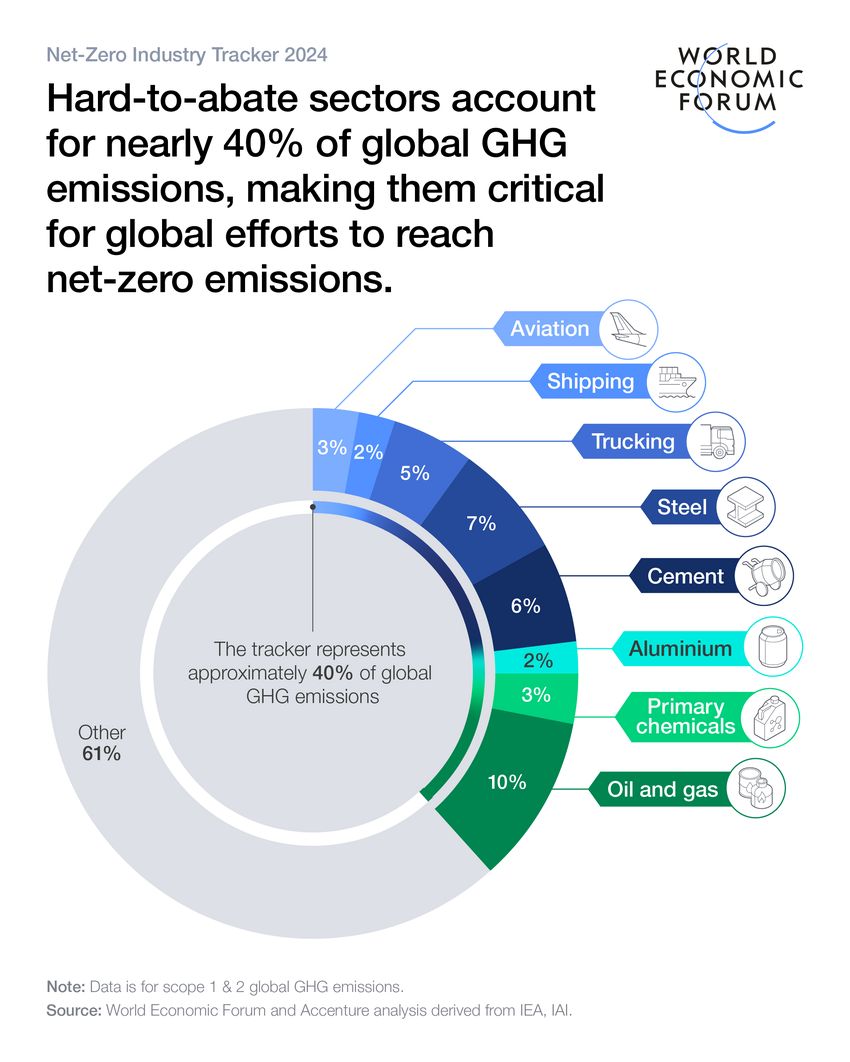
One of the largest challenges we face as a modern society is in reducing emissions from the indutrial processes that are key to our infrastructure and economic growth. Such industries, including cement, steel, and aluminum, together represent about 30% of global greenhouse gas (GHG) emissions, and almost 40% when including those of the transport sector (see graphic).
Why are they so difficult to abate? Lets take a look at steel making, which alone represents about 7% of global GHG emissions. Steel is essential to our society. From skyscrapers and bridges, and from household commodities like autos, tools and appliances, steel provides both strength and flexibility.
However, the most widely used steel making processes rely heavily on fossil fuels, largely based upon coal. These fossil fuels provide the intense heat and the right chemistry needed to extract the iron needed for steelmaking from ore, and to transform the iron to its final steel product. CO2 is emitted, both by the burning of the fossil fuels, but as a byproduct of the chemical manufacturing process. This adds up to more than 2 tonnes of CO2 emitted per each tonne of steel produced.
The production of low carbon steel requires a fundamental rethinking of age-old processes
Existing steel scrap can be recycled, reducing emissions by avoiding the iron ore mining and extraction process. Many modern steel manufacturers, such as Nucor, utilize Electric Arc Furnaces (EAFs) to replace fossil fuels in the melting process, thereby further reducing their carbon footprint. By using renewable electricity sources in combination with their EAF process, Nucor is able to reduce the carbon intensity of their products to 1/3 of those produced by traditional steel making processes. Net zero steel products, such as for automobiles, can be achieved through the offering of carbon offsets.
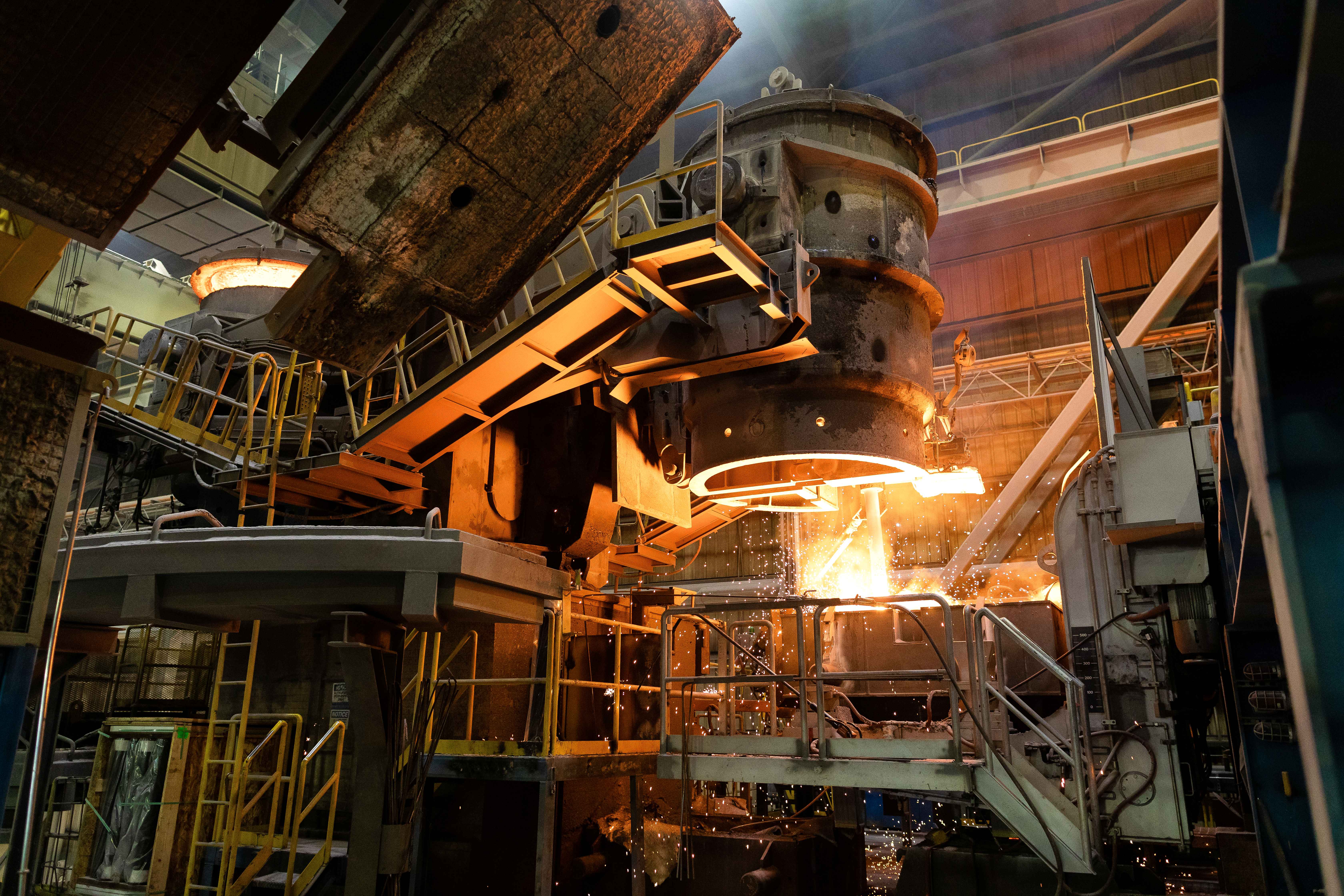
While circularity and recycling are key low carbon processes in place today, viable low carbon solutions to the entire steelmaking process, from iron extraction to final product, are needed to make a broader impact on emissions. One promising alternative to fossil fuels which can provide the necessary high temperatures as well as the chemistry needed is clean hydrogen.
Stegra’s Boden plant in Sweden is cited as one of the most advanced green hydrogen steelmaking facilities under construction- with plans to produce 5M tonnes of green steel annually by 2030. How will this work? Green hydrogen will be produced on site by a large scale electrolyzer using wind power and water as inputs. The green hydrogen will be used to create near zero carbon iron from ore, replacing traditional coal-based processes. EAF and other innovative processes will be used to produce the final near zero steel from the extracted iron. The overall process will produce steel with about 95% less CO2 emissions than if made from traditional processes. Stegra has agreements with Porsche for use of the green steel in its autos, and IKEA for use in its warehouses.
Another encompassing technology pathway for producing low carbon steel is being developed by Boston Metal. Boston Metal uses a novel electrochemical cell powered by renewable energy. The exacting chemical and high temperature (1600°C) conditions are maintained within the cell to extract the high quality molten metal needed for green steel products directly from iron ore. Their operational facility in Woburn, MA can be viewed here.
How will low carbon steel technologies make a lasting impact on emissions?
Low carbon steel buyers needed! The First Movers Coalition, a group organized by the World Economic Forum, advocates for companies that utilize steel to commit to purchasing at least 10% of their inventories as near zero steel by 2030. Almost 30 companies from the US, EU and India have signed on to this commitment. This is a start in providing the demand signal needed to encourage the scaling of the low carbon steel manufacturing processes from innovators like Nucor, Stegra and Boston Metal.